Why it is needed
Why continuous measurement matters
How often blood is tested in intensive care is set largely by workload, by how much blood a patient can spare and by habit, and much less by how quickly the chemistry in question can change. When a value moves faster than it is measured, two results can be joined by a line that points the wrong way, and the team at the bedside has no data that would show it.
Sentinel is being designed to take the schedule out of the picture, so that what is known about an organ no longer depends on when someone last drew blood.
Design objectives
What the instrument must do
The patients who most need close monitoring are the ones who can least afford to lose blood, which is why the first objective is that measuring more often must not mean drawing more.
These are objectives we are designing toward, and each one still has to be demonstrated in hardware.
- Continuous
- Biochemistry followed as a stream at the bedside, without waiting on the laboratory.
- Sparing
- Measuring more often is not allowed to cost the patient more blood.
- Aware
- It knows what therapy was given and when, from the devices around the bed.
- Candid
- Every estimate is shown with its confidence, and the display offers trajectories and time windows while the decision stays with the clinician.
Where it stands
Development status
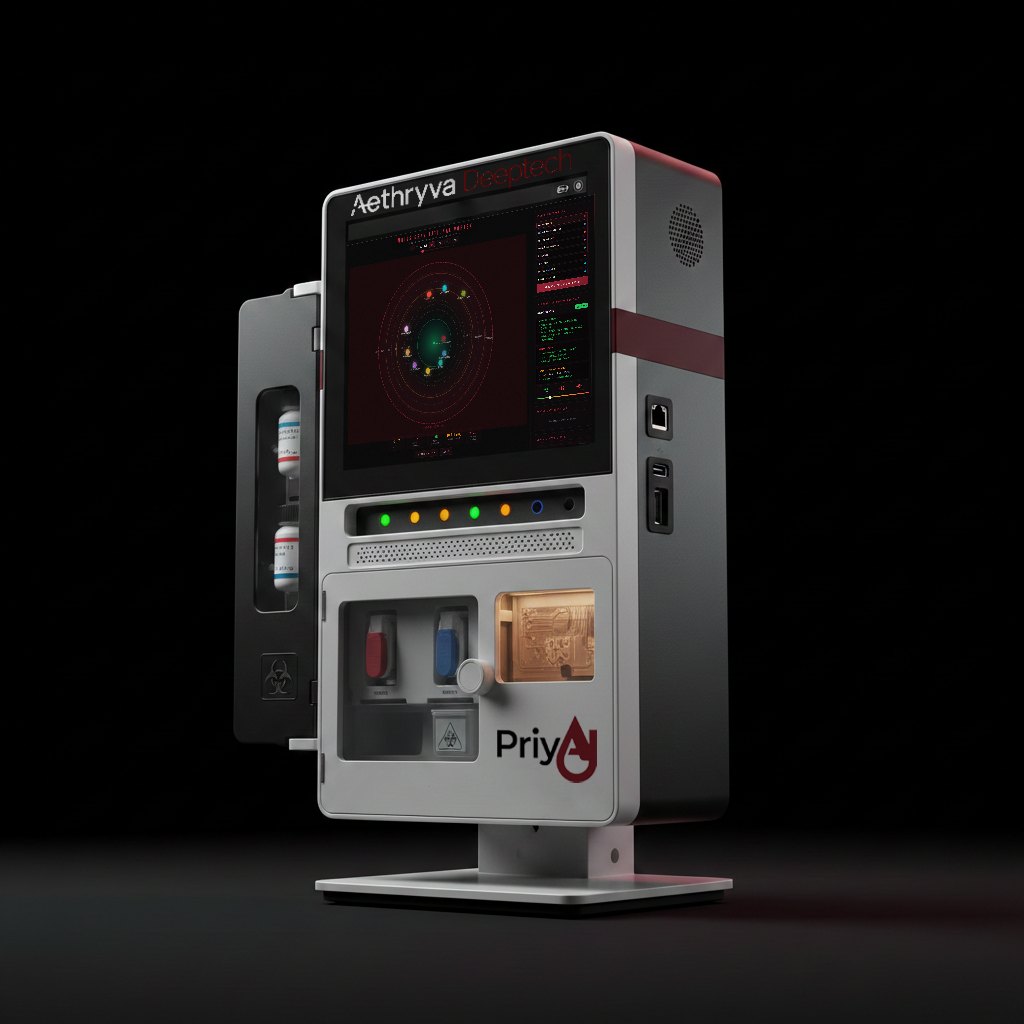
No unit has been built or tested, and the instrument is not available for clinical use. The images on this page are concept renderings, and the figures are illustrations drawn from synthetic data.
What exists today are the methods the instrument would run, for estimation and for intervention timing, which have been tested retrospectively on public critical care databases. The next stage is bench work on the measurement itself, and a prototype follows only once that holds up.
For hospitals, device makers and investors.
- Built
- No unit has been built yet.
- Tested
- The estimation and timing methods, retrospectively, on public critical care records.
- Next
- Bench work on the measurement, and then a prototype.
- Clinical use
- Not available.